Why the Future Belongs to Hives
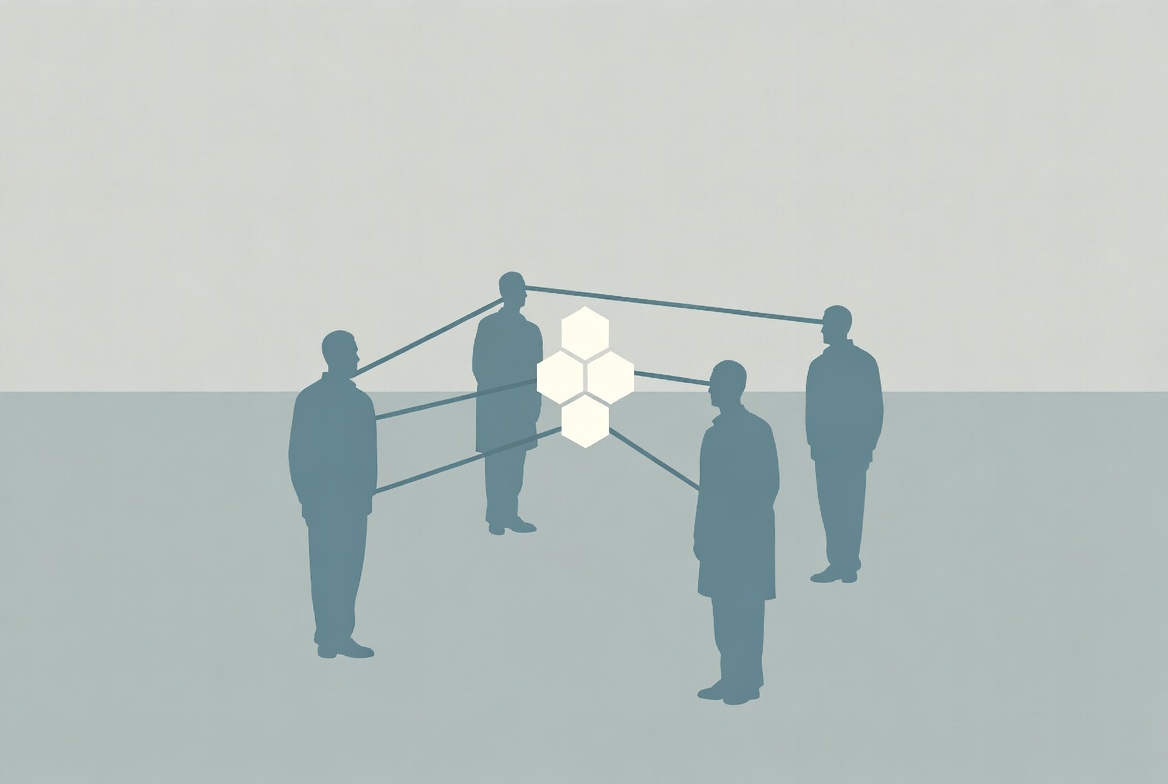
Not so long ago, I encountered an idea that permanently changed how I think about innovation, collaboration, and what human beings can achieve together.
On my way back from work, a friend began sharing the vision for something he had been working on.
As he spoke, I became increasingly uncomfortable.
Not because the idea was bad.
Because it echoed many of the questions and concepts I had been wrestling with myself.
Different words.
Different experiences.
Yet an unexpectedly similar direction.
For a brief moment, I wondered whether it was simply a coincidence.
Then I found myself asking a much more interesting question.
For a moment, I felt an irrational sense of panic.
"Did this guy somehow steal my idea?"
I knew that was highly unlikely, but the similarity was too striking to ignore.
Then a deeper question emerged.
How many of the ideas we call ours are truly ours?
If two people can independently arrive at almost the same idea at the same point in time, perhaps we overestimate the uniqueness of our thoughts.
That experience led me down a dangerous intellectual path.
I began forming a theory.
The universal idea space is broad but not infinite. Not consumable at any point in time, but not inexhaustible across all time. Perhaps if every human that has ever lived existed simultaneously, we would discover that very few ideas are truly novel.
At first, the theory felt persuasive.
After all, many breakthroughs are built on principles that already existed.
Aerodynamics did not suddenly appear with airplanes.
Electricity existed before modern electronics.
Many innovations seem less like invention and more like rediscovery or recombination.
But when I subjected this theory to serious scrutiny, it began to collapse.
I realized that ideas are not static objects waiting to be collected.
Ideas are combinatorial.
A finite number of building blocks can generate an effectively limitless number of combinations.
Language does this.
Science does this.
Technology does this.
Human collaboration does this.
More importantly, reality itself keeps changing.
New tools create new possibilities.
New possibilities create new problems.
New problems create new ideas.
The idea space is not merely being explored.
It is constantly expanding.
And that realization led me to an even more important lesson.
The greatest source of innovation is not individual genius.
It is the collision of different experiences, perspectives, and realities.
What appears impossible from one perspective may be obvious from another.
What one person sees as a limitation may simply be a blind spot that someone else can help navigate.
The more diverse the perspectives around a problem, the greater the number of possible combinations that can emerge.
Looking back, I can now see that this experience quietly planted one of the ideas that would eventually shape NextHive.
We believe that people achieve more when they work together than when they work alone.
Not because collaboration is fashionable.
But because ideas compound.
Because perspectives multiply possibilities.
Because collective intelligence consistently outperforms isolated thinking.
That is the thinking behind the Hive System.
A system designed to make collaboration sustainable by combining transparency, accountability, decentralized governance, and meaningful rewards for contribution.
If ideas are combinatorial, then the future belongs to environments that maximize valuable combinations.
The future belongs to teams.
The future belongs to communities.
The future belongs to hives.
I started this journey thinking I had discovered a theory about the limits of ideas.
I ended it with a deeper appreciation for the limitless potential of people.
Most ideas may be recombinations of existing ones.
But it is precisely those recombinations across people, experiences, technologies, and time that produce the breakthroughs that move humanity forward.
And that is why I believe the collective is greater than the individual.
Not because individuals are unimportant.
But because the most powerful ideas emerge when minds connect.